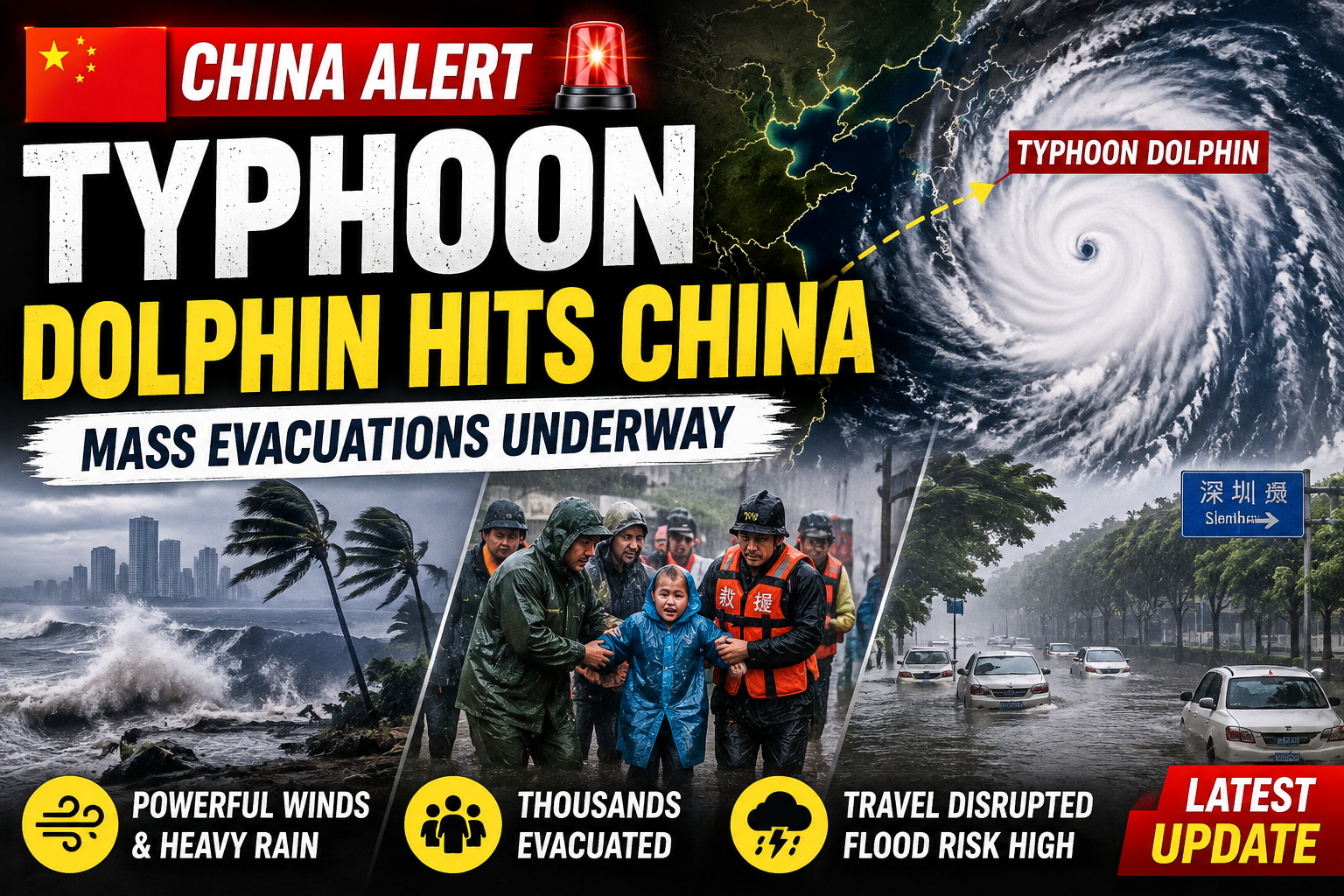
Typhoon Dolphin has unleashed severe weather across parts of China, leaving widespread disruption in its wake through damaging winds, torrential rainfall, and severe flooding. In response to the growing threat of rising floodwaters and potential landslides, local authorities carried out mass evacuations, moving large numbers of residents from vulnerable locations to safer ground. The storm crippled regional infrastructure and travel networks, forcing widespread cancellations and suspensions across airline flights, passenger rail lines, and ferry routes. Major urban centers, including Shanghai and its surrounding regions, bore the brunt of the heavy downpours, prompting emergency response teams to remain on high alert throughout the event.
Even after making landfall and gradually losing its structural intensity, the lingering remnants of Typhoon Dolphin continued to pose a serious hazard. The storm system continued to drop heavy rain as it moved further inland, sustaining the danger of secondary disasters like flash flooding and mudslides long after the initial winds subsided. In several locations, rainfall totals reached historic levels, breaking long-standing local weather records and straining regional drainage networks. Emergency management crews and meteorologists are keeping a close watch on river levels, critical roadways, and high-risk communities as the potential for additional rainfall keeps the region on edge.



Comments (0)
No comments yet. Be the first to comment!