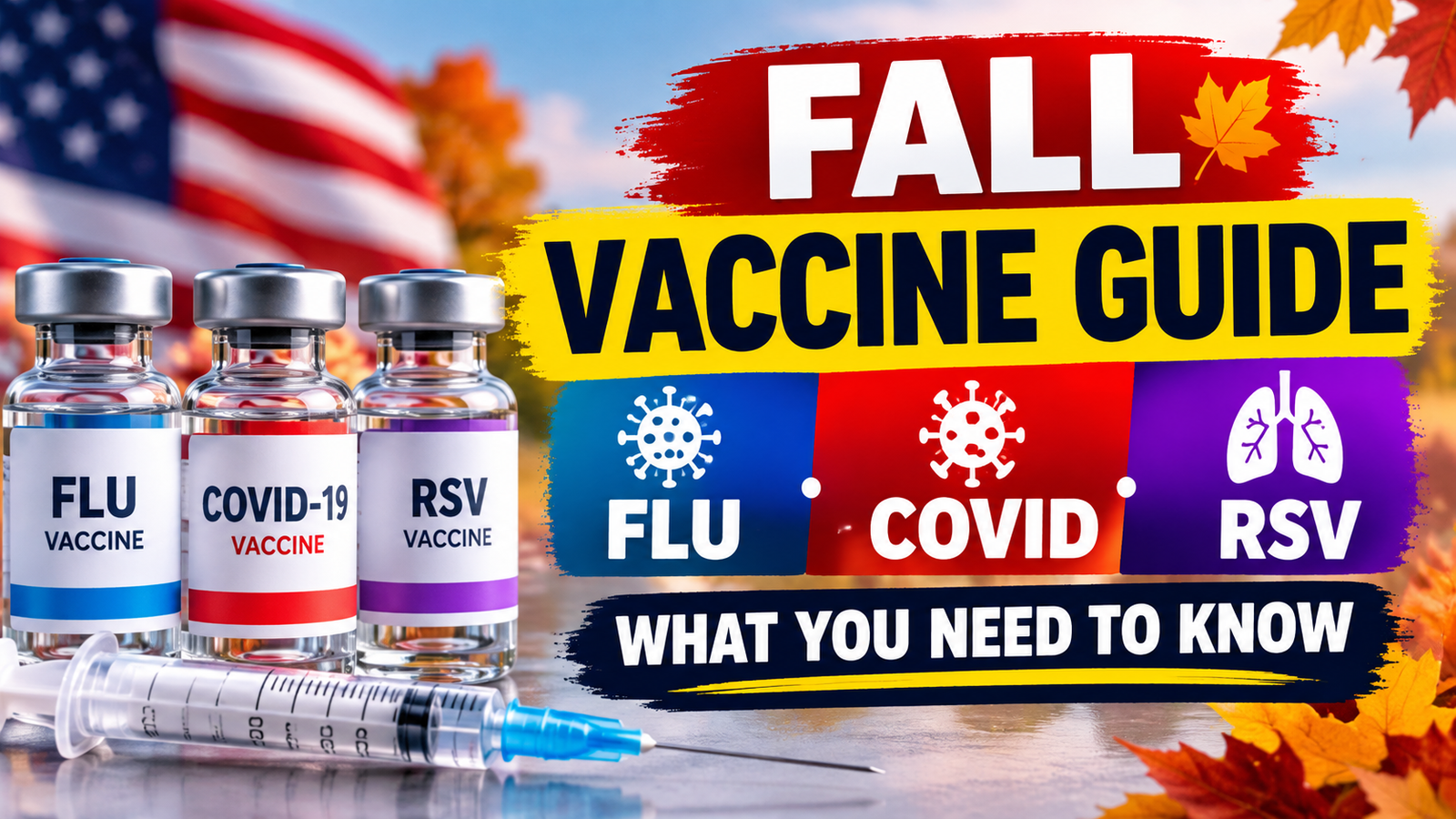
Fall 2026 Vaccine Guide: What Flu, COVID & RSV Shots Should You Get?
As Americans prepare for the fall respiratory-virus season, questions are growing about which vaccines may be recommended for protection against influenza, COVID-19 and respiratory syncytial virus, commonly known as RSV.
This year's vaccine landscape is attracting particular attention because federal guidance and recommendations from major medical organizations are not completely aligned.
Flu vaccination remains a major focus
The CDC says its seasonal influenza recommendations remain in effect for the 2026–27 flu season. The updated flu vaccines are designed to protect against three major influenza viruses, and all three components were changed from the previous season. One of the updates targets an H3N2 virus that circulated widely during the previous flu season.
Major physician organizations are also encouraging broad flu vaccination. Their guidance recommends vaccination for people 6 months and older, while emphasizing the importance of protection for groups more vulnerable to severe illness.
Doctors say timing matters. October is generally considered a useful target for getting the flu shot because protection can decrease over the course of the season. However, vaccination later in the season can still provide protection while flu viruses are circulating.
What about COVID-19?
Updated COVID-19 vaccines for the 2026–27 season have also been approved in the United States. The recommendations and eligibility rules are more targeted than during the height of the pandemic, with particular attention to older adults and people at higher risk of serious disease.
Medical organizations, however, continue to emphasize the importance of COVID vaccination and say decisions should consider a person's age, health status and individual risk.
RSV protection is more targeted
RSV vaccination is different from flu vaccination because it is not generally an annual shot for everyone.
Current guidance focuses mainly on older adults and other people with elevated risk of severe RSV disease. Certain pregnant people may also have an RSV prevention option intended to protect newborns. Eligibility depends on individual circumstances and current recommendations.
Can vaccines be given together?
For people who are eligible, flu, COVID-19 and RSV vaccines can generally be administered during the same visit. That does not mean everyone needs all three. The appropriate vaccines depend on factors such as age, pregnancy, medical conditions and previous vaccination.
As the fall season begins, Americans are being encouraged to check their vaccination status rather than waiting until respiratory viruses are widespread.
Bottom line: There is no single vaccine plan that fits every person. Flu vaccination remains broadly recommended, while COVID-19 and RSV protection are increasingly tailored to age and health risk. Anyone uncertain about which vaccines are appropriate should check the latest guidance and speak with a qualified healthcare professional.



Comments (0)
No comments yet. Be the first to comment!