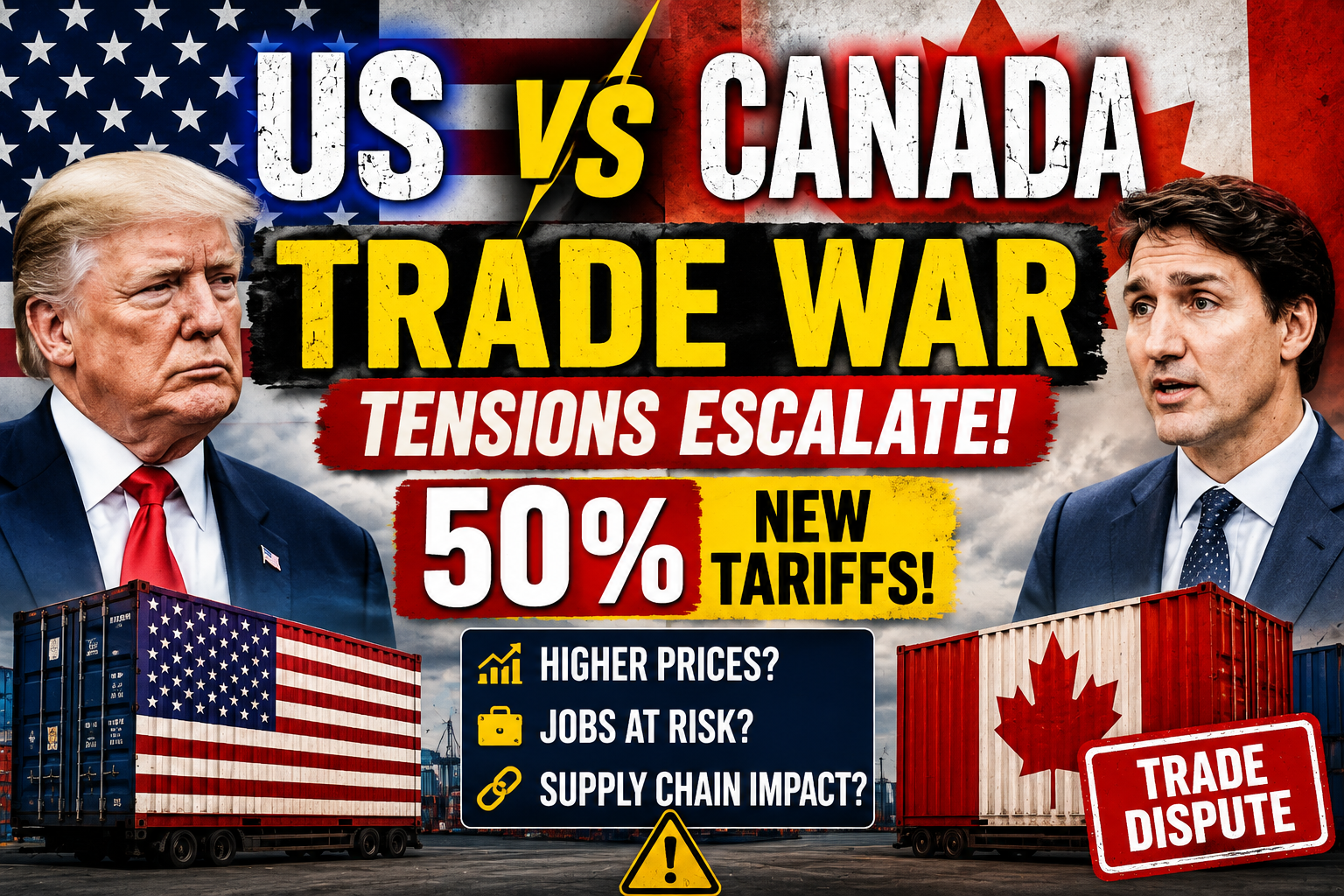
United States and Canada are facing a new phase of trade tensions as both countries prepare additional tariffs on each other’s products.
Canada plans to introduce new duties on selected American goods from September 8, responding to U.S. tariffs imposed on Canadian products. The measures could affect industries including steel, agriculture, electronics, machinery and other manufactured goods.
The dispute is especially important for the automobile industry. Washington has threatened further tariffs on Canadian vehicles and auto parts if the two countries fail to reach an agreement. This could increase costs for companies that rely on factories and suppliers on both sides of the border.
For ordinary consumers, the biggest concern is prices. When imported products become more expensive, businesses may pass some of those additional costs to customers. Companies could also face higher production expenses and supply-chain problems.
The United States and Canada have one of the world's most important trading relationships, making the dispute significant beyond the two countries. A prolonged tariff battle could affect jobs, investment, manufacturing and food prices.
However, the situation is not necessarily permanent. Negotiations could restart, and both governments still have an opportunity to reduce tensions through a new trade agreement.



Comments (0)
No comments yet. Be the first to comment!